
Energy Transfer
Energy transfer. This section covers the following topics:
- Atmospheric circulation
- Hadley cells
- Ferrel cells
- Polar cells
- Global wind patterns
- Oceanic circulation.
Overview
Atmospheric circulation
In an ideal situation, air from the tropics (the area of surplus) moves to the poles (the area of deficit). Nature, however, is not so straightforward and there is a three-cell model.
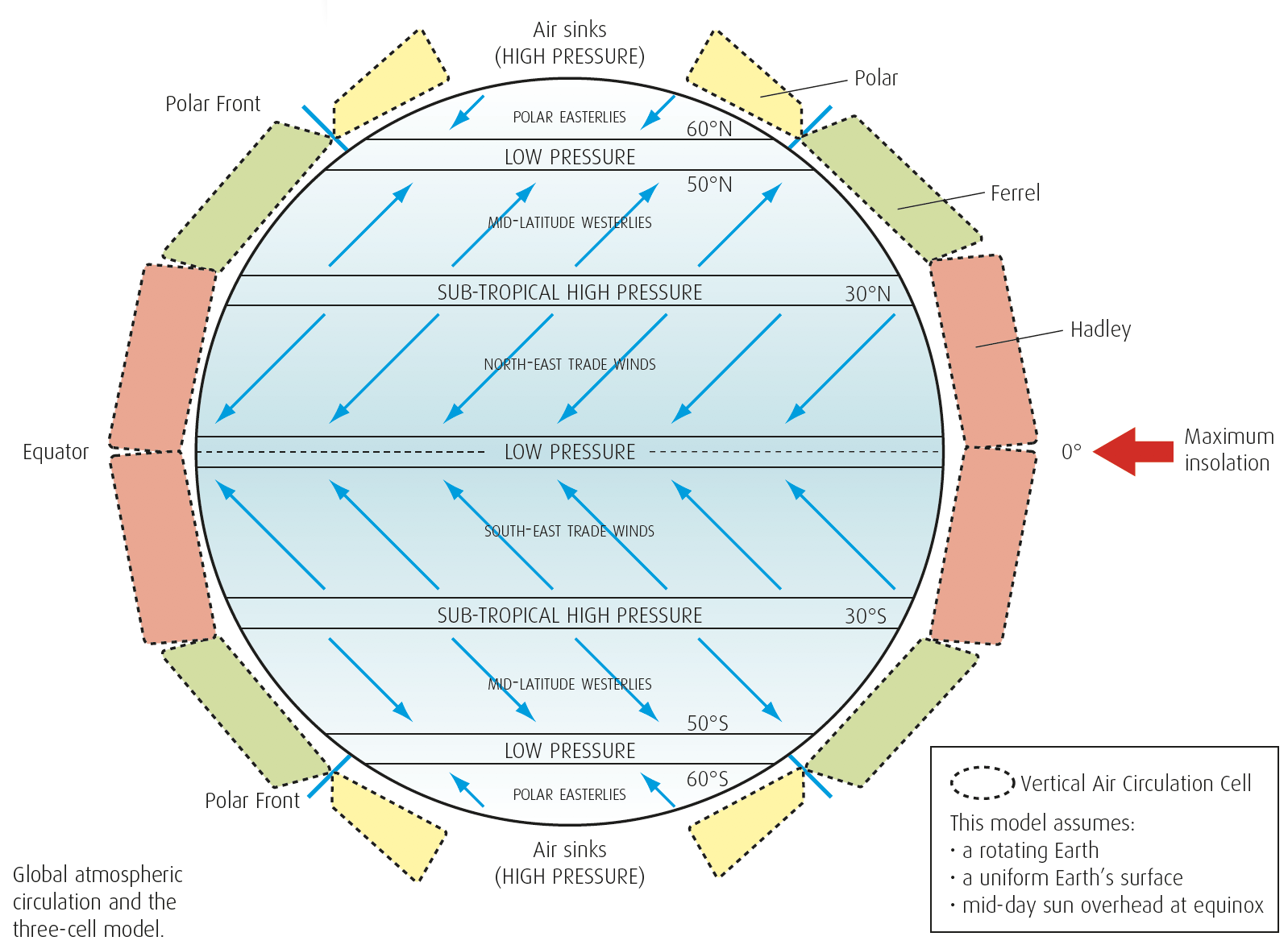
For more on this topic, have a look at our Higher Geography Study Guide – New Edition, pp. 36–39.
Activities
Learn about atmospheric circulation by following this link.
Quizzes
Click a link below to take a topic quiz:
Thoughts
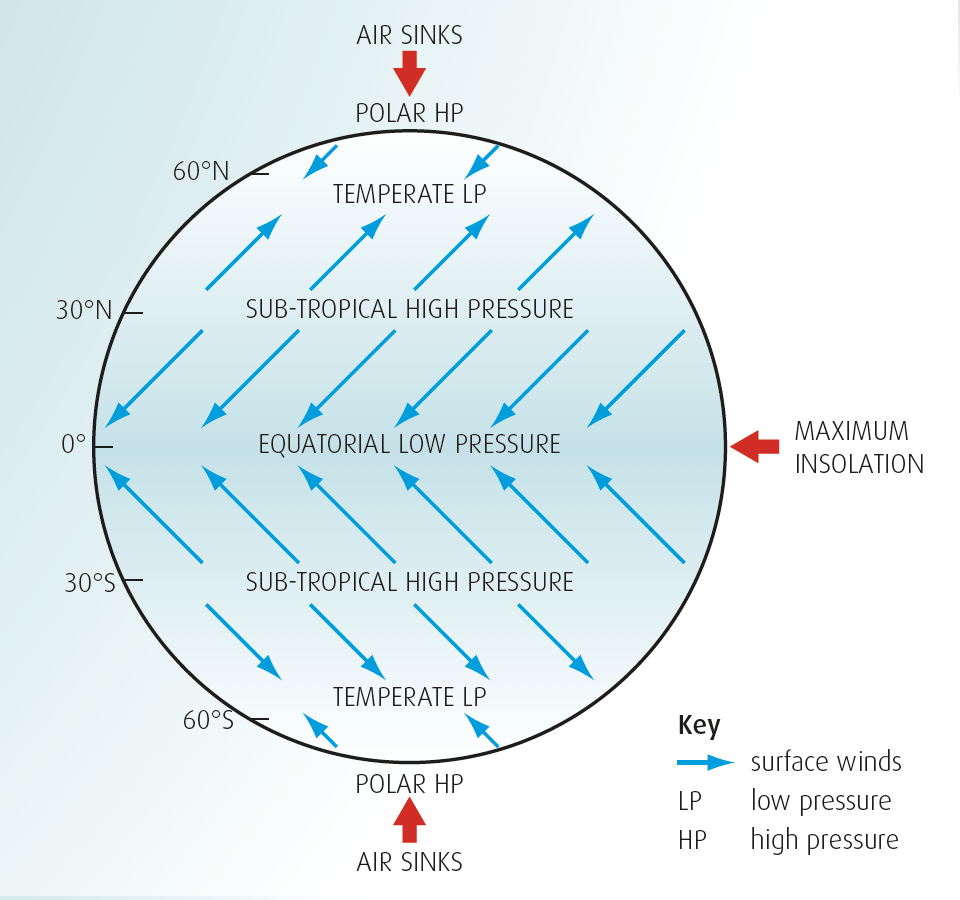
1. Practise drawing the sketches of polar, Hadley and Ferrel cells. Explain how circulation cells in the atmosphere and the associated surface winds assist in the transfer of energy between areas of surplus and deficit heat.
2. Study the reference map below, which shows selected ocean currents in the North Atlantic Ocean.
(a) Describe the pattern of ocean currents in the North Atlantic Ocean.
(b) Explain how they help to maintain the global energy balance.

| i | Ocean currents follow loops or gyres – clockwise in the North Atlantic. Currents from the poles to the Equator are cold, whereas those from the Equator to the poles are warm. Ocean currents are greatly influenced by the prevailing winds |
| ii | In the Northern Hemisphere a clockwise loop or gyre is formed, with warm water from the Gulf of Mexico (Gulf Stream/North Atlantic Drift) travelling northwards and colder water moving southwards, e.g. the Canaries Current
Cold water moves southwards from polar latitudes, e.g. the Labrador Current. This movement of warm and cold water helps to maintain the energy balance. Energy is transferred to the ocean currents by friction and they are also affected by the Coriolis effect; the configuration of land masses deflects ocean currents. As a result of differential heating, density differences occur in the water masses, resulting in chilled polar water sinking, spreading towards the Equator and displacing the less dense, warmer water upwards |